
The dynamic pricing that actually makes sense in your restaurant (and it's not Dani García's)
By Samuel Carrillo7 min read
In April, Dani García proposed charging more on a Saturday at 10pm and less on a Monday at 7, the way airlines do. At Tipi we believe there's another kind of dynamic pricing in restaurants that does make sense: the one that rises or falls when the real cost of the dish, a seasonal vegetable, a fish, a cut of meat, moves by more than 5%, the same logic the trade already applies to seafood under a market-price label.
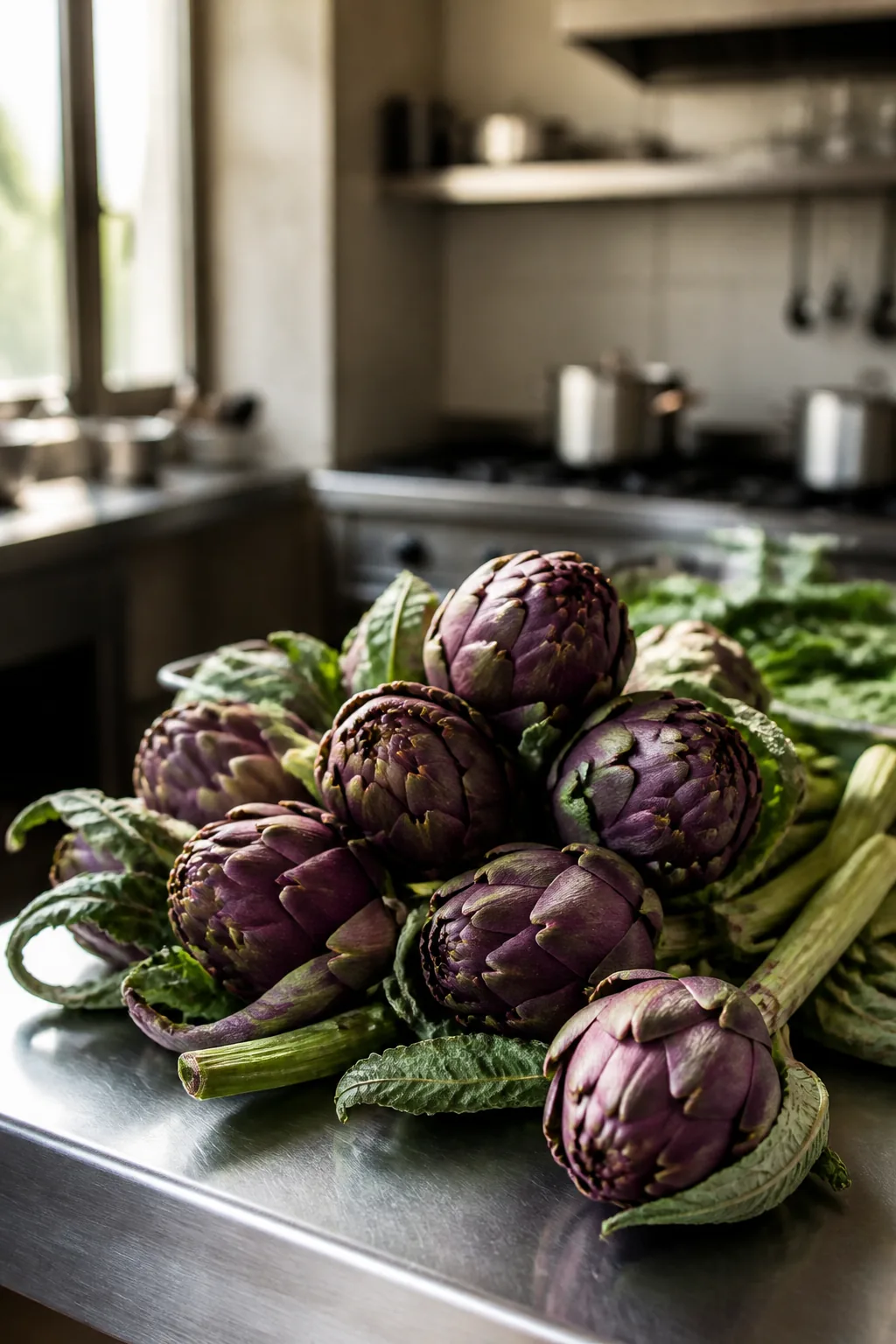
Who hasn't watched artichokes climb at the end of the season and wondered whether to touch the price of the dish that in November cost a third of what it costs now? You think about it, look at the menu and leave it. After all, only a few weeks left. The problem is those few weeks repeat every year, with artichokes and half a dozen other products, and the margin each season eats never shows up as a single figure: it dilutes dish by dish, week by week.
Dynamic pricing by demand or by cost? Not the same thing
Dani García is not talking about this. He's talking about something else, and it's worth not mixing them up.
Demand-based dynamic pricing is what he proposed: raise a dish at 10pm on Saturday because the room is full, lower it on Monday because it's empty. Airline logic.
Cost-based dynamic pricing is what we propose here: raise or lower the selling price because what it costs to make changed, not because more or fewer people are in the room. It's the logic of market-price seafood, the formula bars and restaurants across Spain already use for fresh fish and shellfish.
| Model | What moves the price |
|---|---|
| By demand (Dani García) | How full the room is at that hour |
| By cost (this proposal) | The real food cost in the recipe cost card |
A customer who pays more because the room is full is, at bottom, paying for something that doesn't benefit them. A customer who pays more because oil went up is paying the same thing it would cost them to cook it at home: more.
Is it legal to change a dish price from one week to the next in Spain?
Yes, and here's the detail almost nobody tells you. The Community of Madrid says that if you order a dish off menu or marked S.M. (market price), the establishment must state the price or provide a menu where it appears. OCU confirmed it in July: for any market-price product there must be a sufficient reference so the consumer knows how much they will pay.
Translation: you can move the price, but you can't leave it hanging.
And if your menu is only on QR, OCU reminds that restaurants must also provide a physical menu. If the QR says €9 and the board says €8, that's on you, not the customer.
The part that isn't so pretty
To do this well you need cost traceability by supplier, not quarterly, but every time a key ingredient crosses a threshold, and you update the printed menu and the QR the same day. Also explain the change: a cost rise is tolerated better than a demand rise, but only if the customer sees the justification. And there's a ceiling: nobody wants to order their usual dish and find a different price every time.
Before dynamic pricing: a steady recipe cost
Spain has more than 300,000 hospitality establishments, according to the Spanish Hospitality Yearbook. Our own estimate: most set menu prices by gut feel, copying the place next door or inheriting a number from three years ago, not from an up-to-date recipe cost. Before moving price with cost, the easy win is having a solid recipe cost and leaving it alone. Cost-based dynamic pricing is not step one. It's step two.
An example with numbers: the artichoke that triples in price
Illustrative example, with our own estimated figures.
Recipe cost for a portion of sautéed artichokes with ham: 400g of artichoke, plus ham, oil, garlic and lemon. In November, with artichoke at 1,20€/kg, cost is 1,68€. Menu price: 6,50€. Gross margin: 74%.
At the end of the season, at 3,60€/kg, triple, cost rises to 2,64€. If you don't move the menu price, margin falls to 59%: fifteen points less, on the same dish, without showing up until you close the month.
Keeping 74% would mean raising to 10,20€, a 57% jump almost no customer accepts overnight. What most people do, without calling it dynamic, is raise halfway, to €7.50, for example, or pull the dish in scarce weeks. The lesson is not to charge €10.20: it's that without measuring cost by season you don't know you're losing fifteen margin points at the usual price.
How to start cost-based pricing this week
- Review which dishes lean hardest on a single volatile ingredient, seasonal, fish, meat: those are the candidates, not the whole menu.
- Set a threshold: a move above 5% on an ingredient that is more than 10% of the dish's cost.
- Update the recipe cost when the threshold is hit, and change printed menu and QR the same day.
- Leave a line the waiter can repeat: "+€1 for the seasonal artichoke rise, same margin as always".
- Start with sides, not the house anchor dish.
How often you can change a price (and what we don't know)
There's no rule fixing how many times you can change a price; the law requires visibility and consistency between what's shown and what's charged, but it doesn't cap frequency. We don't know of documented cases in Spain of neighbourhood restaurants systematically repricing by cost outside fish: this is a reasoned proposal, not a practice at scale. And it remains a hypothesis that customers truly tell apart "up for cost, explained" from "up because we said so".
Keeping this score by hand, dish by dish, season by season, is work very few can take on. That's why apps like Tipi do that tracking for you: they flag which dishes lost margin, how much to raise the selling price, or how to fix it without touching it. If you want to see what your own menu says, write to us and we'll put numbers on it.
If something new comes up on prices and costs, you'll read it here first.
Which dishes on your menu have lost margin?
We'll review with you which dishes have eaten into margin on cost, and what would need to move, or not, on the selling price.
Sources
- Dani García, 50, chef: "If a trip's price changes with demand, a restaurant's should too", El Español
- Dynamic pricing in restaurants: will we pay more to dine on Saturday?, The Objective
- Full information: Restaurants, Community of Madrid · Consumer affairs
- The detail to watch when ordering in a restaurant this summer that is illegal, according to OCU, Infobae (14/07/2026)
- Recipe-cost margin benchmark (27-32% food cost / 65-75% gross margin): reference standard used by hospitality food-cost consultants, not Tipi's own data.
- Spanish Hospitality Yearbook (more than 300,000 establishments)