
Tourists spent 10.9% more this July (and less of it reached your bar)
By Samuel Carrillo7 min read
A full terrace and a till that does not add up
You pull the shutters down on a Saturday in July. The terrace never stopped and you had a waitlist at half past two.
Then you close the till and the number doesn't look like last year's.
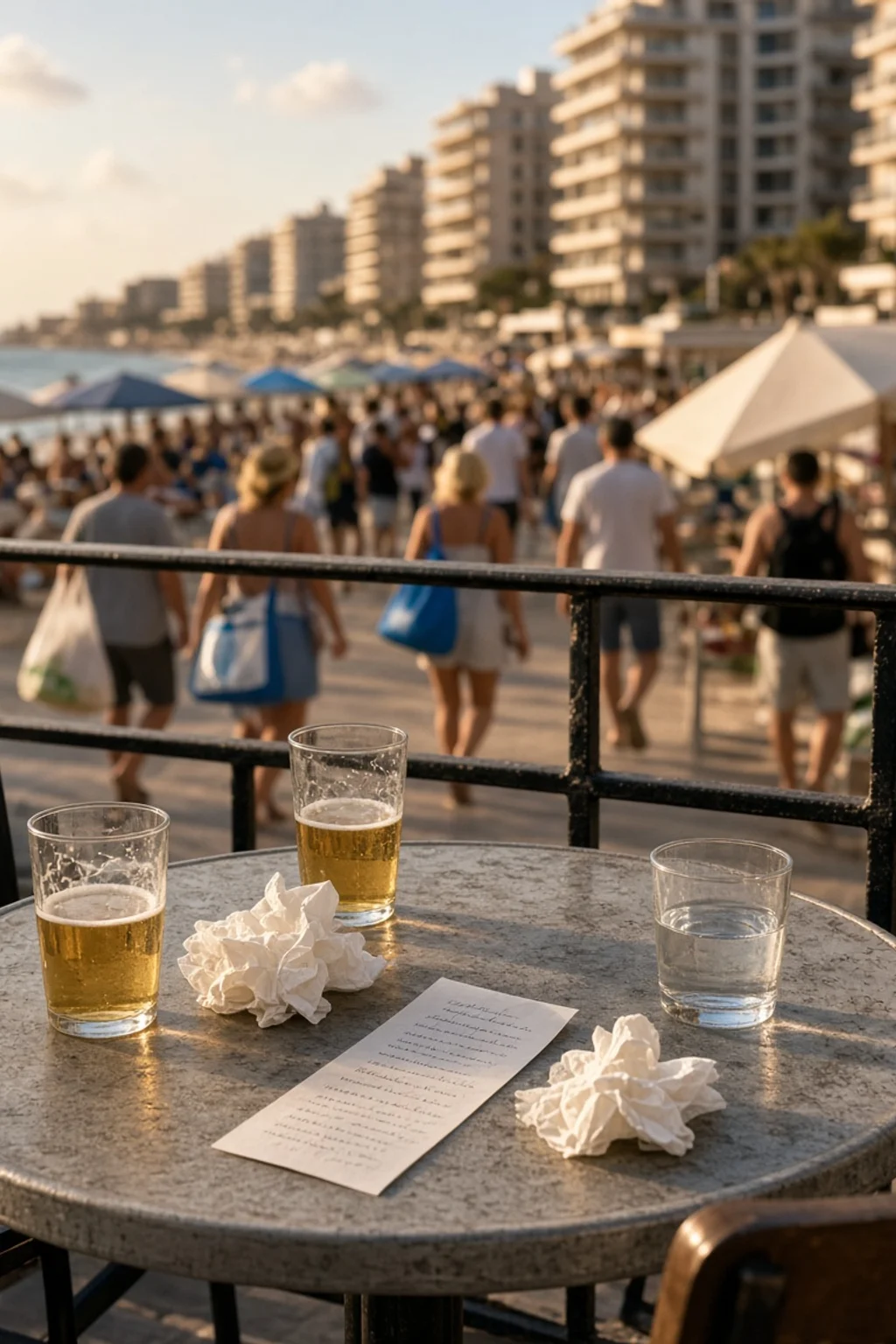
In the morning you saw them walk past. Beach cooler, umbrella and two supermarket bags. They cook in the apartment and come down for a drink at seven.
It isn't that fewer people came. It's that the ones who came decided something else.
What EGATUR says about July 2026
| Total foreign tourist spend | €18.218 billion, +10.9% |
|---|---|
| Spend on food and drink out | €2.723 billion, +7.4% |
| Average spend per tourist | €1,579, +5.9% |
| Average daily spend | €218, +3.7% |
| Restaurant prices | +4.5% year on year |
Source: INE Tourist Expenditure Survey, July 2026, and restaurant price index reported by Hostelería de España
.
Tourist money hasn't fallen. It's up almost 11%. Any story that starts with "tourists arrive broke" runs straight into the official stats.
You're losing share of the tourist's wallet
Food and drink out was 14.95% of total tourist spend in July 2026. In July 2025 it was 15.43%. Half a point on €18.218 billion is almost €90 million that went elsewhere.
Where? Package holidays grew 19%, activities 9.2% and accommodation 6.7%. All above food’s 7.4%. Tourists spend more, but put less of it into sitting at a table.
The customer who really left is the local one
Tourism plugs the hole for two months. The other ten are paid by the neighbour, and the neighbour has cut back.
In Q1 2026, out-of-home consumption occasions fell 3.1%, drinks occasions 4.4% and average spend per person 2.5%, to €235.95, according to panel data reported by Hostelería MadridInside that drop, beer accounts for 94.1% of the loss in drinks and appetisers fall 7.4%. Midday food, meanwhile, grows 1.6%.
And there's a competitor that didn't exist before: 1.3 million people already eat at the supermarket, twice as many as last year, and almost four in ten new prepared-meal occasions come from bars and restaurants.
Why do tourists spend less in restaurants if they arrive with more money?
Where they sleep. Anyone in a holiday rental has a kitchen, and a kitchen changes the whole behaviour.
In the Balearics they talk about a 10% to 15% drop in local retail spend while big-box stores post a strong July and August, as Menorca Info reported on 20 August 2026The family in an apartment, they say, "consumes like a local": does a big shop, cooks and goes out less often.
And when they go out, they go differently. Reme Cerdá, manager of the Marina Alta hospitality and tourism association, puts it like this: "People don't eat or drink as much anymore". In that same article from 6 September 2026 is the figure that sums up the decade: "a few years ago we talked about 17–15% margins; today if we hit 3% or 4% it's a success".
How much of that record reaches your venue
Split the €2.723 billion of food and drink across the 300,000+ venues in the Hospitality of Spain yearbookYou get €9,077 per venue in July (~€293/day). Growth alone (+€188 million): €625 a month, ~€20 a day. With menus up 4.5%, that is CPI and little more. The headline record, shared out, is inflation. Caveat: tourism clusters on coasts and islands; in inland towns, zero.
A worked example: sales fall 6% and margin falls 20%
Own estimate from a typical coastal bar cost structure; not a market statistic.
A venue with 90 tickets a day in July.
| Line | July 2025 → July 2026 |
|---|---|
| Average ticket | €24.00 → €22.50 |
| Daily sales | €2,160 → €2,025 (−6.2%) |
| Food cost | €713 (33%) → €749 (37%) |
| Labour (same service) | €600 → €600 |
| Daily gross margin | €847 → €676 (−20.2%) |
The same 90 tickets came in and you raised the menu 4.5%, so the ticket "should" be €25.08. But the guest who ordered starter, main, dessert and wine now orders something to share and a water.
Sales fall 6% and gross margin falls 20%. Three times as much. And food cost rises in euros even though you sell less, because the dishes that survive the guest's cutback — sharing plates — are almost never the ones you costed to protect margin.how to cost a daily set menu: the average can look perfect while you lose money every day.
What to do before October
- Compare July's sales mix with last July's. Not total sales — the mix: which dishes and drinks changed weight.
- Look at ticket count separately from average ticket. If tickets hold and the average falls, you don't have a footfall problem and no campaign will fix it.
- Recost the five dishes that gained the most mix weight. Guests chose them, not you, and they drive your food cost.
- Review drinks on their own. If your drop looks like the panels, that's where the local margin hole is.
- Before October, lock the winter menu with these numbers. In January there's no cash left to experiment.
Where AECOC and the consumption panel don't match
AECOC (February 2026) says 78% keep or raise hospitality spend; panels measure visits at −3.1%. Stated intent vs measured purchase. Also, EGATUR food spend includes hotels: independent hospitality’s share is below 14.95%. Marina Alta and Balearics mark trend, not scale. August still missing (late September).
If you do not know which dishes gained weight this summer or what each one costs you, tell us: we will review the mix and the recipe costs before winter menus lock in.
Do you know which dishes drive your food cost this summer?
We'll review your sales mix and the recipe costs of the dishes that gained the most weight.
Sources
- INE, Tourist Expenditure Survey (EGATUR), July 2026, provisional data
- July 2026 restaurant price index, INE data reported by Hostelería de España
- Hostelería Madrid, out-of-home consumption in Q1 2026, with panel data from Worldpanel by Numerator, Kantar, NIQ and MAPA
- AECOC 2026 out-of-home consumption barometer, 3 February 2026
- La Marina Plaza, AEHTMA comments, 6 September 2026
- Menorca Info, tourist spend shifting to big-box stores, 20 August 2026
- Hostelería de España yearbook, more than 300,000 venues
- Allocation maths and worked example: Tipi's own calculations