

How to calculate what each dish really costs, and stop losing money without noticing
By Javier Porras6 min read
Updated 13 September 2026.
«If I sell it for more than three times what it costs, there's margin to spare.» We've all said that. It sounds solid. Until you find out the «what it costs» was a rough guess from two years ago.
A guest dropped it on you at the bar, without malice: «Hey, do you actually know how much that burger leaves you?» It wasn't an attack. It was the question you avoided because the room was full and it felt good.
The answer may be hiding in the dish that sells most. The one you're proud of. The one that looks profitable because you charge «quite a bit more» than you think it costs.
«How can I sell so much and keep so little?»
The triple belief and the catch of «more or less»
I'm going to tell you something you probably won't like. The answer may be hiding in one of the dishes that leave your kitchen most often. That dish everyone orders. The one you're proud of. The one that looks profitable because you sell it for quite a bit more than it costs. Or rather, more than you think it costs.
Because one thing is what you think a dish costs. And another altogether is what it really costs to put it in front of the guest.
Your best-selling dish can also be the one losing you the most money
Carlos and his star burger
The following story is fictional, but it reflects a situation that is far too common in hospitality.
Carlos had a burger that was the star of his restaurant. Brioche bun, beef, cheese, bacon, house sauce and chips. He sold it for €11 and hundreds went out every month. When he created the recipe, he did a quick calculation and concluded that making that burger cost him roughly €3.
So he thought: «I sell it for more than three times its cost. There's margin to spare.» And he kept selling it. One after another.
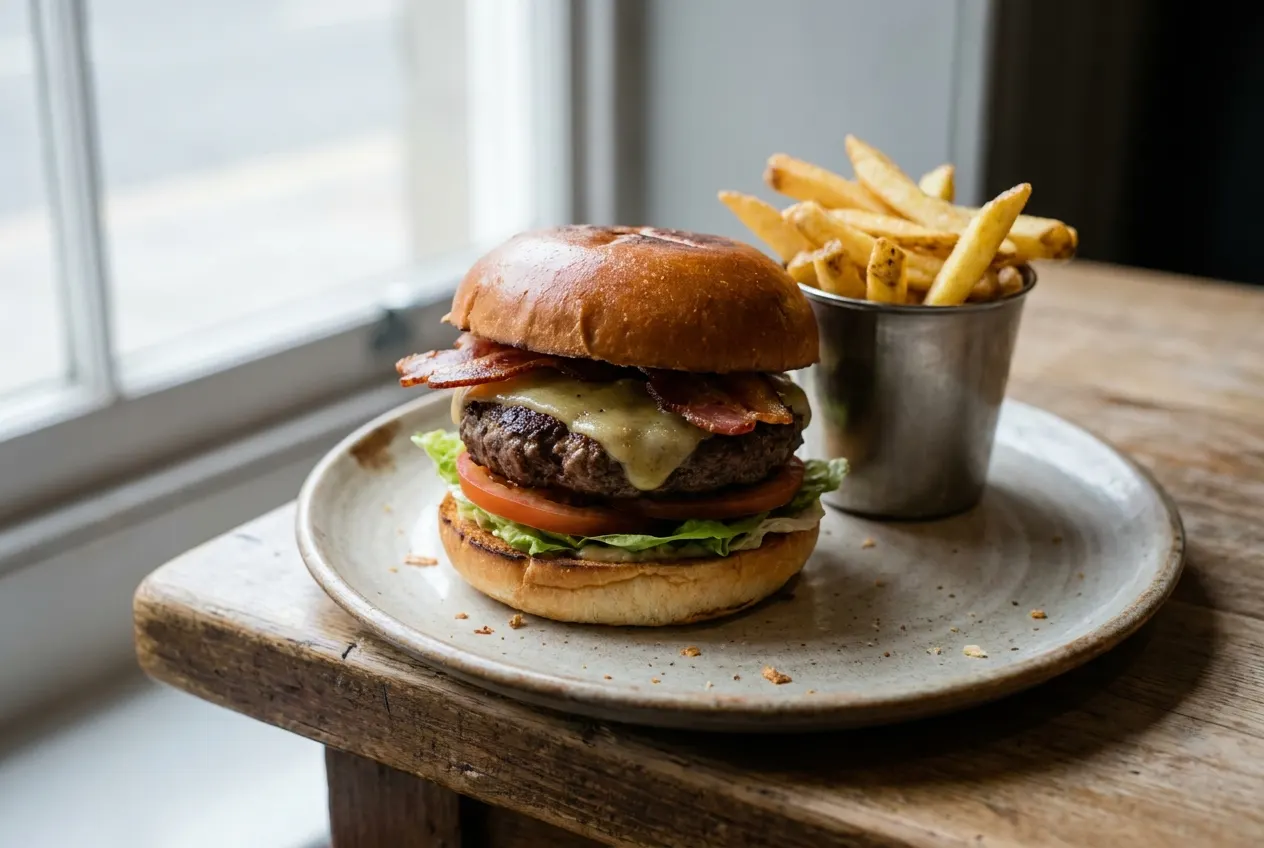
The problem is that cost was calculated by eye. He hadn't counted the sauce properly. Or the fryer oil. Or the full garnish. Or waste on some ingredients. He also hadn't updated the beef price after several supplier increases.
When he finally sat down and calculated it properly, he discovered the burger didn't cost €3. It cost €3.95. The difference was €0.95 per unit.
Cost by eye
3,00 €
Real cost
3,95 €
Difference / unit
0,95 €
Monthly impact
475 €
Annual impact
5.700 €
€0.95 may not sound like much. But Carlos sold 500 burgers a month. €0.95 × 500 burgers = €475 a month. Over twelve months: €475 × 12 = €5,700 a year.
Carlos wasn't necessarily losing €5,700 from the till. But he was earning €5,700 less than he thought, from a single dish. Now imagine the same error appearing in five, ten or twenty recipes on the menu.
Carlos didn't have a sales problem. He had a control problem. And this matters: you can have a full restaurant and still run a poorly profitable business. Because selling a lot does not mean earning a lot.
To know how much you earn, you first need to know how much it costs to sell
Calculating the cost of each dish isn't sitting down with a calculator because you have too much free time. Hospitality operators rarely have that problem. It's about knowing whether every time you sell a dish you're generating margin, or simply moving product, filling tables and paying bills.
The calculation that lets you know what each recipe really costs to prepare is called a recipe costing (or escandallo). Yes, I say that with care and respect. Because recipe costing is one of the pillars of any well-run restaurant. It's a bit like your mum. It keeps your feet on the ground. It tells you truths you sometimes don't want to hear. And it stops you making decisions based on impulse alone.
A recipe costing is the calculation of what each portion really costs you, and for it to work it must include:
- The ingredients in a recipe.
- The quantity used of each ingredient.
- Its purchase price.
- Waste or yields.
- The total preparation cost.
- The final cost per portion.
Exactly what it is, what it is not, and why it expires with every delivery note is in what a recipe costing is.
With this calculation you can see how much money each dish leaves, keep portions consistent, reduce waste and set prices using real data. Not based on what the place next door charges. Or on what feels expensive or cheap. Or on the classic: «I reckon we're fine at this price.»
«Recipe costing is the financial X-ray of your dish.»
It shows you what the guest doesn't see: how much money is really inside that dish before it leaves the pass.
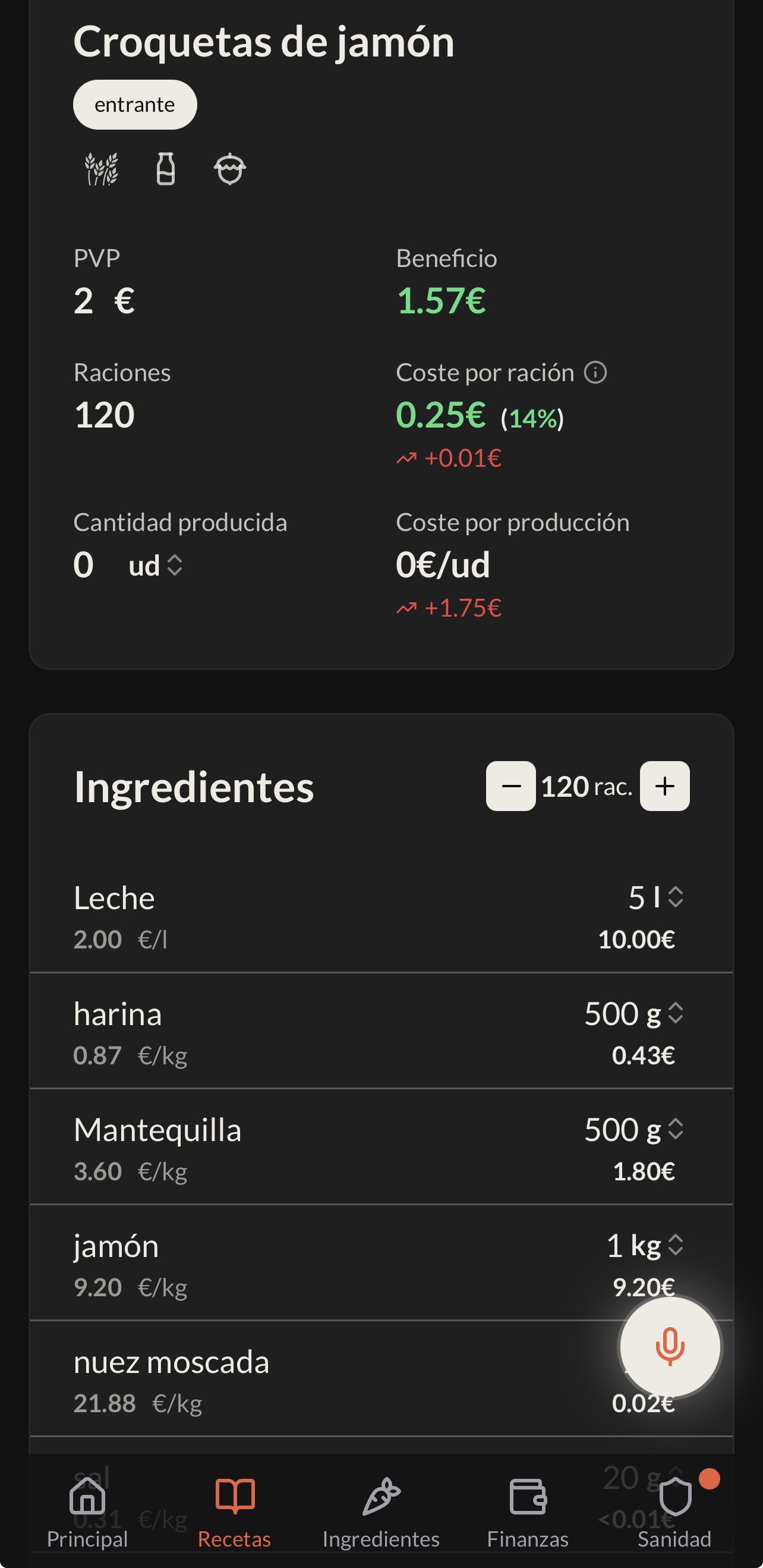
You can do this calculation in a spreadsheet, on paper sheets, or with a specialised tool like Tipi.
What matters isn't so much where you do it, but that you use real weights, up-to-date supplier prices, and that you review costs whenever something changes.
Because a tool can make the work much easier, but no recipe costing helps if it's built on old prices or invented quantities.
What dish cost doesn't fix
Saber el coste no baja el alquiler ni arregla sola una plantilla imposible. Tampoco garantiza que cocina respete la ficha: para eso hace falta contrastar teórico y real.
Lo que sí arregla es dejar de decidir a ciegas. Sin coste por ración, el food cost, el margen y la carta rentable son castillos en el aire.
You don't need to learn everything at once
This guide is split into short pieces so you can apply what you need today, without swallowing an entire treatise. Start with the practical calculation, then move on to metrics and control:
- How to build a recipe costing step by step, with the burger example.
- Food cost and gross margin: how much you really earn on each sale.
- Theoretical vs actual cost, and the mistakes that make a costing lie.
- How to design a more profitable menu without costing the whole list in one day.
Start with the step-by-step recipe costing if you haven't yet calculated the cost of your star dishes. If you already have sheets, jump to food cost and gross margin.
Si el plato estrella te deja menos de lo que creías, dínoslo y le ponemos números.
Weigh one dish this week. The rest of the menu can wait. The bestseller's margin cannot.
Or dictate the recipe and Tipi calculates the cost
If you don't want to work it out in a notebook, this is the shortcut: you tell Tipi the dish like a coworker in the kitchen.
Does your bestseller leave you less than you thought?
Con Tipi calculas el coste real del plato y dejas de trabajar con el triple a ojo. Dínoslo y le ponemos números.
Sources
- Historia de Carlos y cifras 3 € vs 3,95 €, 0,95 € × 500 × 12 = 5.700 €: ejemplo ficticio de Tipi para ilustrar el coste a ojo. No es el dato de un local concreto.
- Definición operativa de escandallo (ficha con ingredientes, cantidades, precios, mermas y coste por ración): criterio de control de costes en restauración independiente usado en esta serie Tipi.