
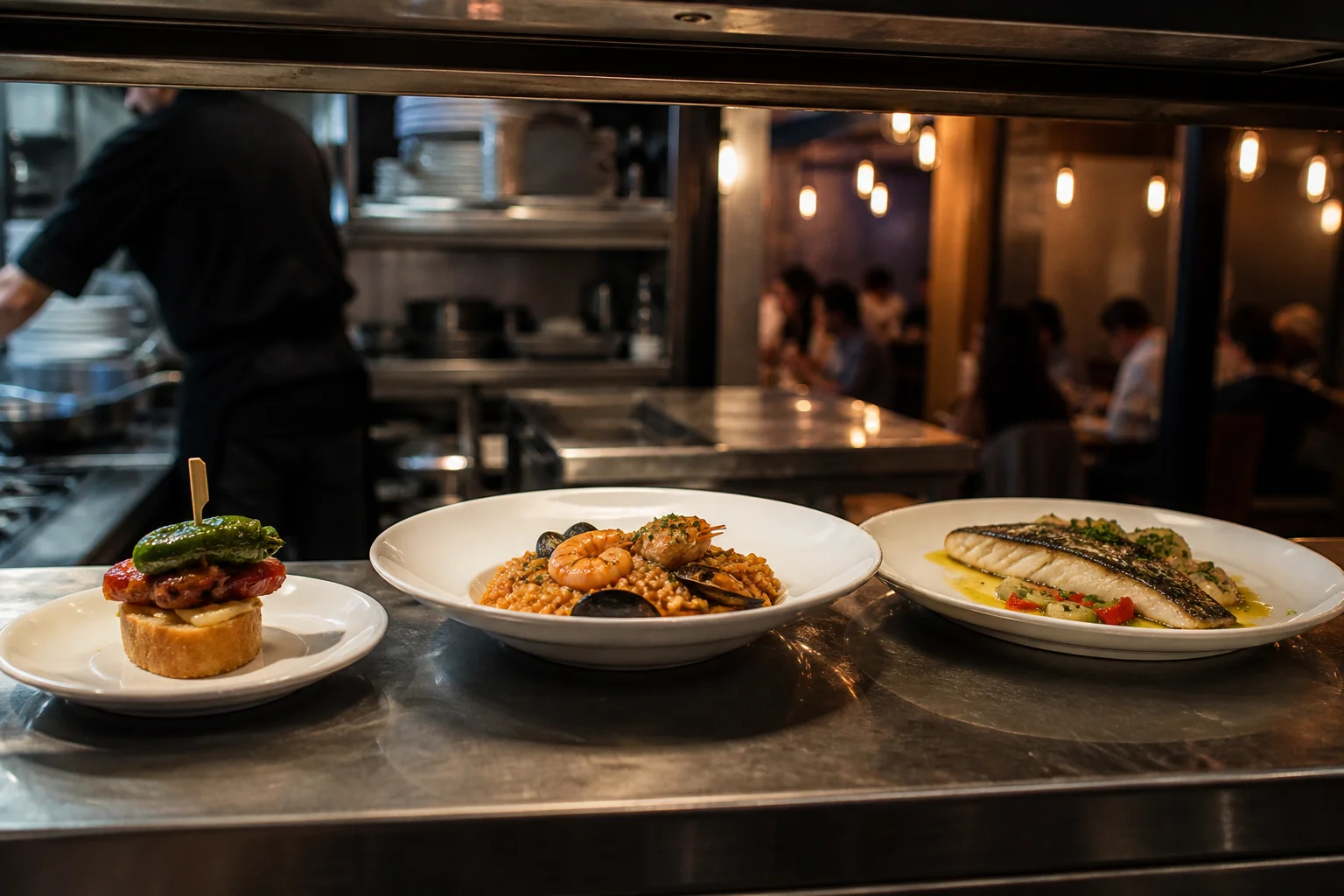
What food cost should a restaurant in Spain have?
Por Javier Porras7 min read
Actualizado el 13 de septiembre de 2026.
Estás con el PyG abierto o con el escandallo a medias y la pregunta te sale sola: «¿Mi food cost debería estar en el 25 %, en el 30 % o puedo llegar al 35 %?»
La respuesta cómoda sería un número. La útil es otra: el food cost correcto es el que tu modelo puede soportar y seguir siendo rentable cuando sumas personal, alquiler y el resto.
No existe un porcentaje perfecto que sirva para todos los restaurantes.
No hay un % correcto para todos
Se busca una cifra porque es fácil de comparar y de repetir en WhatsApp. Una cafetería, una hamburguesería, una marisquería y un restaurante gastronómico no tienen la misma estructura de costes.
El tipo de producto, la elaboración, el ticket medio, el peso de las bebidas y el personal cambian el resultado. Perseguir el 28 % «porque lo dijo alguien» sin mirar el resto es cómo te comes el margen sin verlo.
Qué es el food cost y sobre qué se calcula
Food cost is the percentage of net sales that goes to the cost of product sold: food, drinks, ingredients, packaging and sellable consumables. Sales and costs, excluding VAT. For the full definition (theoretical vs actual, dish vs business), start with what food cost is.
Como orientación, muchos negocios de restauración trabajan entre el 25 % y el 35 % de las ventas netas. Es brújula, no norma. Si aún no tienes coste por plato, el camino es el escandallo con precios de esta semana, no el promedio del sector.
Ventas netas
50.000 €
Coste de producto
15.000 €
Food cost
30 %
Por cada 100 € vendidos, 30 € se van en producto. Los otros 70 € no son beneficio: aún tienen que pagar personal, alquiler, suministros, gestoría, comisiones y el resto.
Qué mueve el techo en tu modelo
Antes de enamorarte de un %, mira qué tipo de negocio eres. Estas bandas son orientación, no contrato.
25 % – 30 %
Producto controlado
Buena rotación, procesos relativamente sencillos, menos materia prima cara.
30 % – 35 %
Más complejidad
Materias primas más caras, elaboraciones largas o más peso gastronómico.
Por encima del 35 %
Revisa antes de asumir
Puede ser el modelo (marisco, madurados) o un fallo de compras, porciones o inventario.
Las bebidas suelen llevar otro % que la cocina: conviene mirar comida, bebida y total por separado. Y el precio de compra no es el coste usable: si el pescado te sale a 12 €/kg y solo aprovechas el 60 %, el coste real es 20 €/kg aprovechable.
Sin rendimientos, el escandallo miente a la baja. El food cost mide producto; no mide solo las horas de cocina que ese producto exige.
El freno del prime cost
El % de producto no decide solo. Prime cost = coste de producto + coste de personal. Dos locales con 100.000 € de ventas netas:
Local A
Food cost más bajo
Producto 26.000 € · Personal 38.000 € · Prime cost 64.000 €
Local B
Más margen tras producto + personal
Producto 33.000 € · Personal 24.000 € · Prime cost 57.000 €
A tiene mejor food cost. B conserva más margen cuando sumas personal. Bajar producto a costa de más horas de cocina no siempre mejora el resultado. El equilibrio es producto + personal + ventas, no el % más bajo de la carta.
Si calculas con compras, el número miente
Esta es la pega que más duele: usar solo las compras del mes como si fueran el coste consumido. Sirve de aproximación y también te engaña.
Ventas netas 40.000 €. Compras 16.000 €. Solo con compras:
Parece un desastre. Inventario inicial 8.000 €, compras 16.000 €, inventario final 12.000 €:
12.000 € ÷ 40.000 € × 100 = 30 %
No tenías un 40 %: tenías stock. Es la misma lógica que coste teórico frente a coste real.
Tres comprobaciones si tu % te asusta
Antes de cambiar proveedor o recortar raciones, en este orden:
- Inventario: ¿el % sale de consumo real o de una compra gorda de vino y secos?
- Escandallos y gramajes: ¿faltan aceites, salsas y guarnición? ¿la cocina respeta el peso?
- Prime cost y margen en euros: un plato al 32 % puede dejarte más euros que uno al 20 % si el ticket es otro.
Ejemplo de margen, no de religión del %:
Plato A
Food cost 20 %
Precio sin IVA 10 € · Coste 2 € · Margen bruto 8 €
Plato B
Food cost 32 %
Precio sin IVA 25 € · Coste 8 € · Margen bruto 17 €
B deja 9 € más por venta. El % importa; el margen en euros, la rotación y la dificultad también. Para ordenar la carta, empieza por los platos que más mueven dinero.
Tres números que miraría antes del viernes
- Saca el food cost del mes pasado con inventario inicial y final, no solo con la suma de facturas. Anota el %.
- Pon al lado el coste de personal del mismo mes y suma ambos: ese prime cost es el freno, no el food cost solo.
- Elige un plato ancla de la carta, actualiza su escandallo con el precio de compra de esta semana y mira el margen en euros, no solo el %.
Si no tienes claro food cost frente a margen, el desglose está en food cost y margen bruto en euros.
Cuándo un 35 % es sano y un 25 % es mentira
Un 35 % puede ser sano en marisco o producto caro con ticket alto, poca merma mal controlada y personal contenido. Un 25 % puede ser mentira si el inventario no se valora, si las porciones se van o si el personal se come lo que el producto «ahorra».
No hay un food cost oficial único publicado para todos los modelos en España. La banda 25–35 % es orientación de sector, no un dato de BOE ni del INE. Tu número bueno sale de tu mix, tu prime cost y tu caja, no de un ranking de WhatsApp.
Desde Tipi te ayudamos a ver de dónde sale el %: compras, escandallos y desviaciones. No inventamos el food cost ideal de tu concepto; ponemos números a lo que ya cocinas.
Si llevas meses mirando un % sin saber si es consumo real o ruido de almacén, cuéntanoslo y le ponemos números.
Seguimos contando lo que a otros no les interesa contar.
¿Tienes un % y no sabes si puedes fiarte?
Con Tipi ves el coste de producto plato a plato y cuándo una subida o una desviación se come el margen. Sin prometerte un food cost mágico.
Fuentes
- La banda del 25 % al 35 % sobre ventas netas se usa aquí como orientación de sector en restauración, no como cifra oficial de una única fuente primaria española. No existe un food cost normativo único publicado por el INE o por Hostelería de España para todos los modelos.
- Los ejemplos numéricos del artículo (mes a 50.000 €, inventarios, locales A/B, platos A/B y rendimiento del pescado) son ilustraciones propias para mostrar el método. No son datos de mercado de un local concreto.